
Prompt Engine
Generates and refines effective prompts for AI models to improve output quality.
Are you the owner?
Claim this tool to publish updates, news and respond to users.
Sign in to claim ownership
Sign InDescription
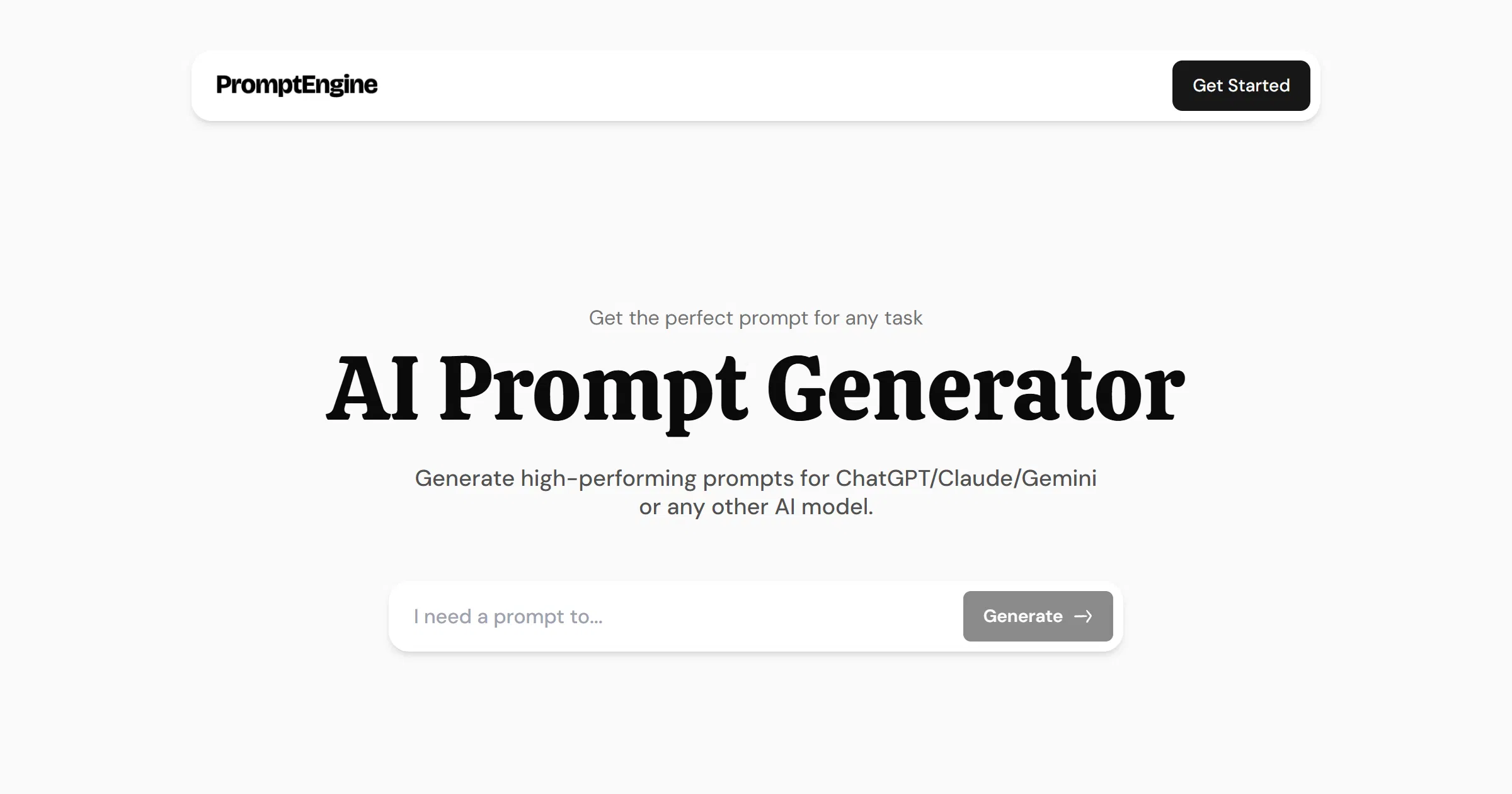
Prompt Engine is a specialized tool designed to help users craft optimal instructions for AI models like ChatGPT. Created by a developer who experienced the common frustration of vague or ineffective prompts, its core value lies in transforming simple user intents into precise, structured queries that AI can understand and execute accurately. It addresses the gap between what a user wants and how to communicate that desire to a language model, thereby unlocking more reliable and higher-quality AI-generated content.
Key features: The platform analyzes a user's initial, basic request and suggests more detailed, context-rich prompt formulations. It offers a library of pre-built, effective prompt templates for various tasks such as writing, coding, analysis, and creative work. Users can test different prompt variations in real-time to compare AI outputs. The tool provides explanations on why certain prompt structures work better, offering educational insights. It includes functionality to save, organize, and version-control successful prompts for future reuse. Advanced features allow for chaining multiple prompts to create complex workflows or multi-step tasks.
What makes Prompt Engine unique is its focus on the meta-skill of prompt engineering itself, acting less as a direct AI generator and more as a force multiplier for existing AI tools. Technically, it operates as a web application, requiring no local installation, and is designed to integrate seamlessly with popular AI platforms through browser extensions or API connections, though it can also be used as a standalone thinking aid. The underlying system likely uses its own AI to deconstruct user intent and apply known principles of prompt design, such as role-playing, step-by-step reasoning, and output formatting specifications.
Ideal for content creators, researchers, developers, and business professionals who regularly use large language models but struggle with inconsistent results. Specific use cases include marketers needing to generate dozens of variant ad copies, data scientists instructing models to clean and format datasets, writers seeking to overcome creative blocks with structured brainstorming prompts, and customer support teams automating response generation with precise tone and detail guidelines. It is equally valuable for educators teaching AI literacy and for anyone looking to systematize and improve their interactions with generative AI.